

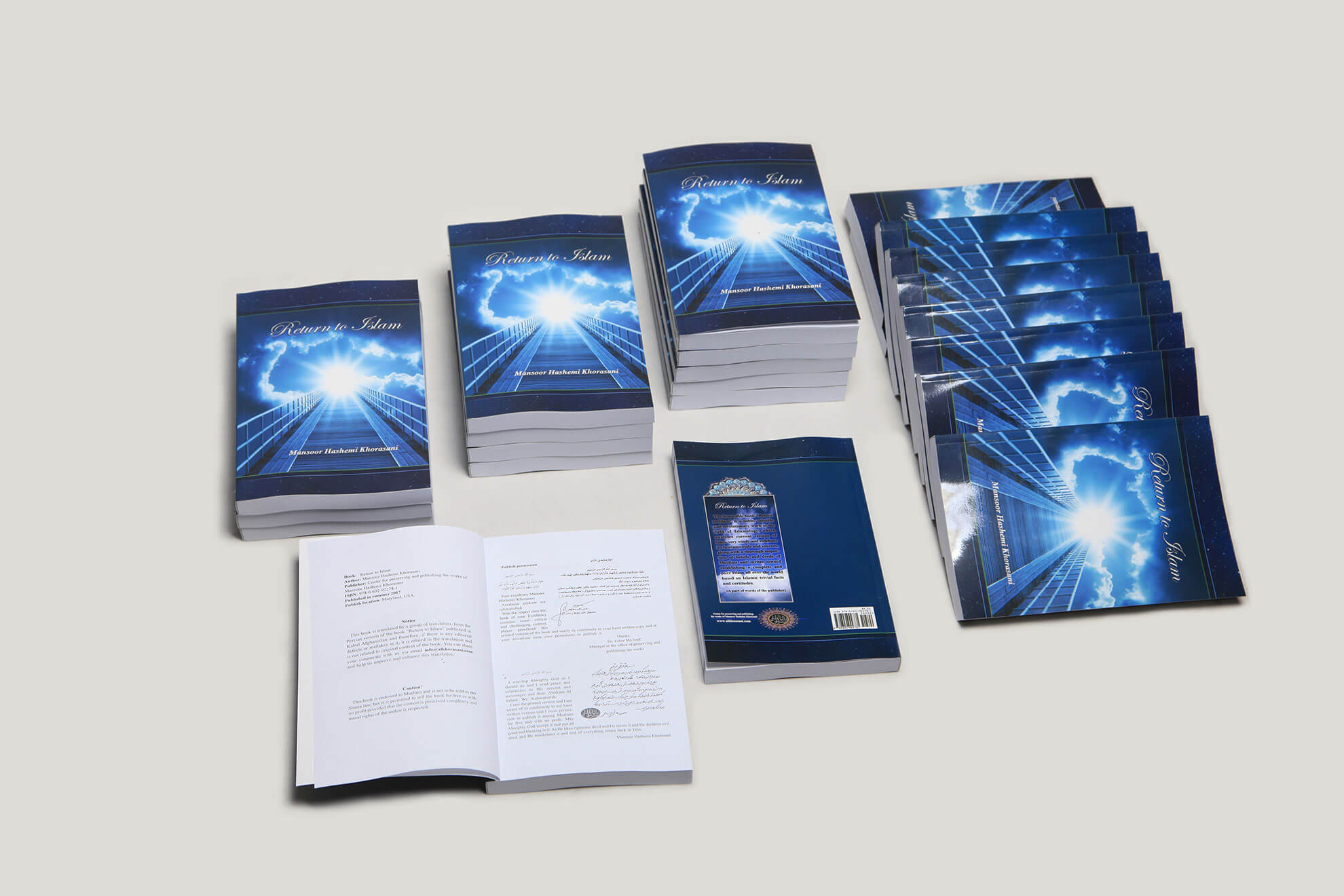
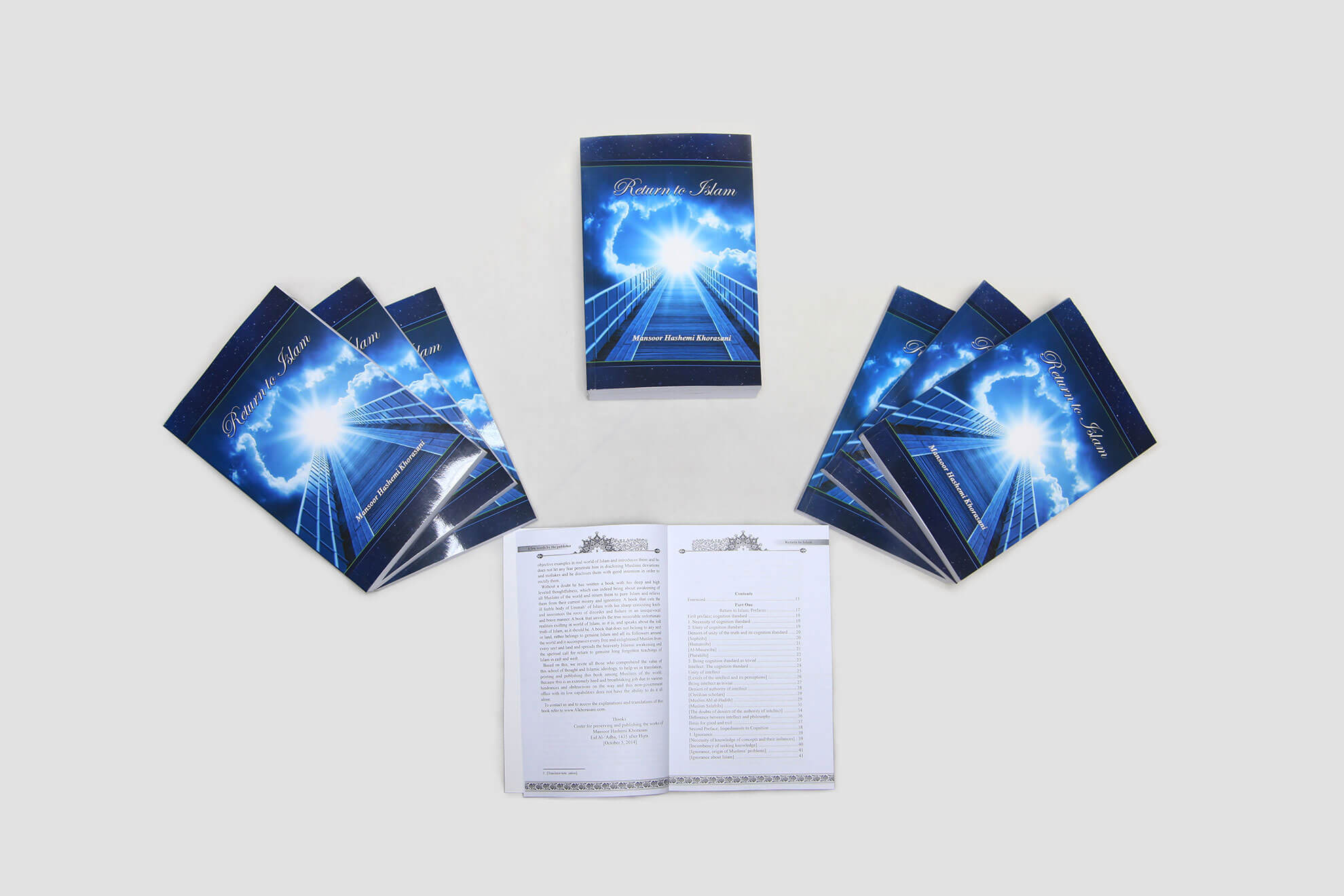
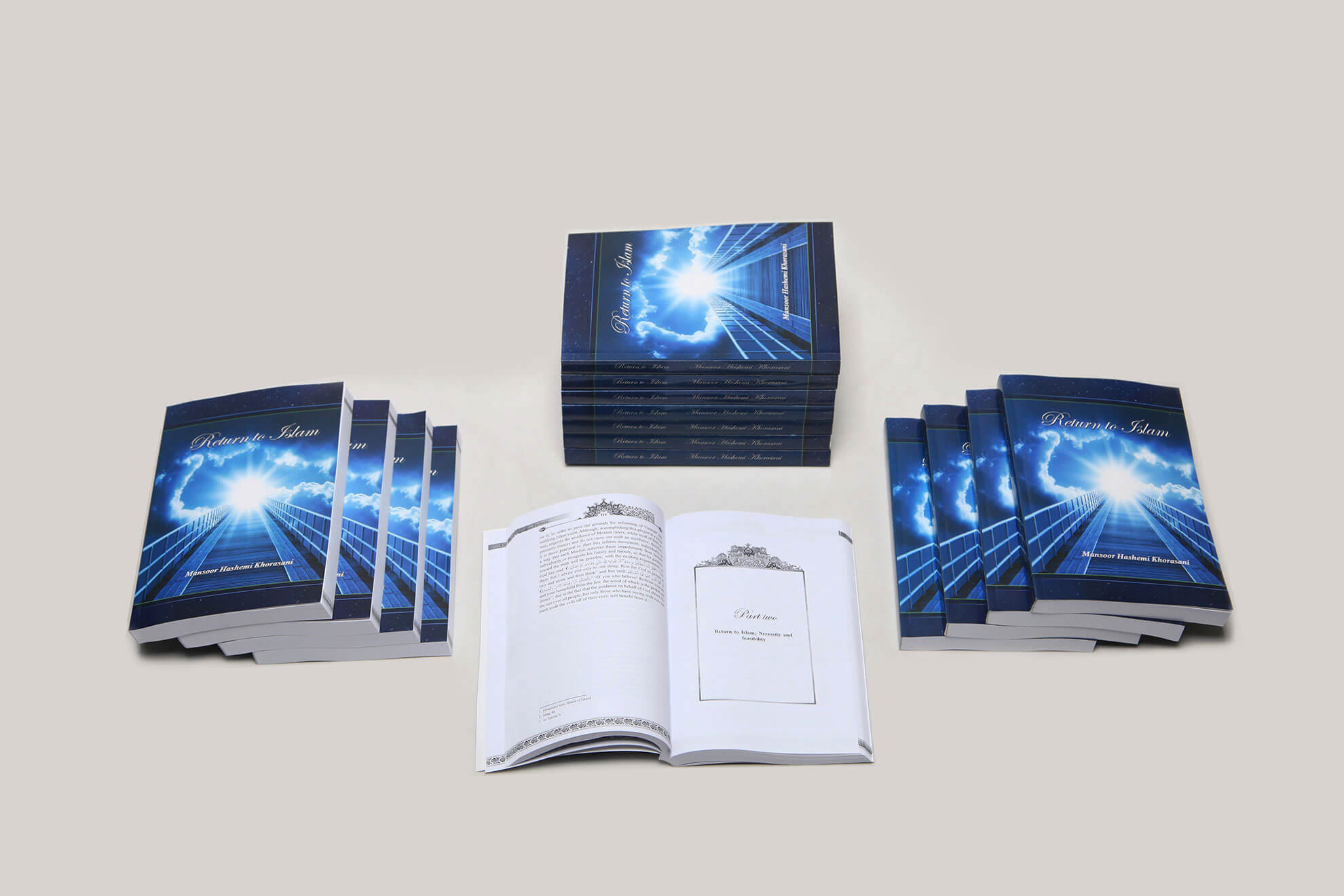
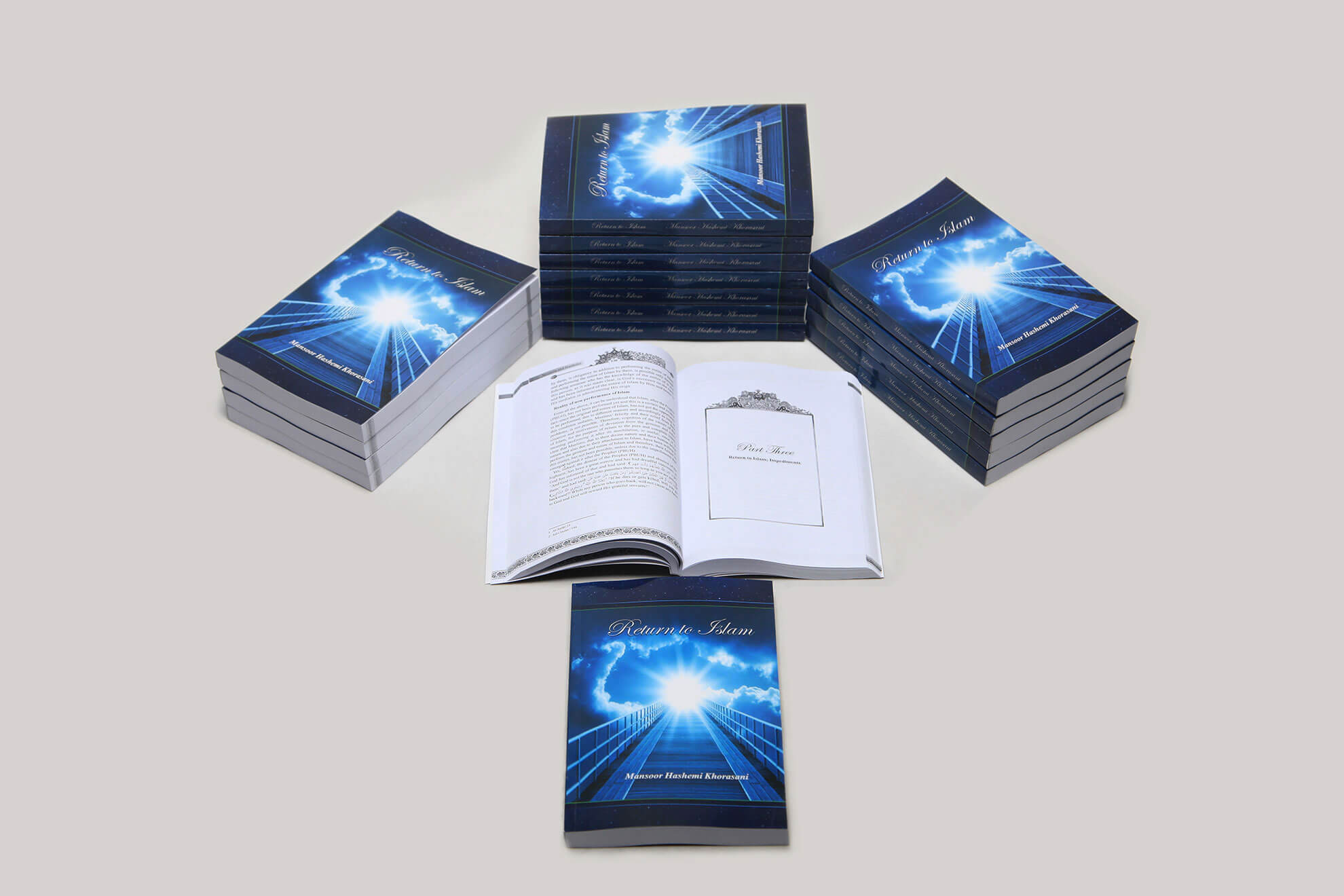
Title: Return to Islam
Publisher: The office of Mansoor Hashemi Khorasani may God protect him
Edition: Second
Publication location: Taloqan; Afghanistan
ISBN: 978-0-692-92278-1
Language: English
Number of pages: 356
Chapter One: Return to Islam: Preliminaries (p17)
- First Preliminary: The Criterion for Knowing (p19)
- Second Preliminary: The Impediments to Knowing (p38)
-- 2. Imitation (p48)
Chapter Two: Return to Islam: Necessity and Feasibility (p117)
Chapter Three: Return to Islam: The Impediments (p131)
Chapter Four: Return to Islam: Knowing Islam (p211)
- Third: Sources of Islam (p232)
[p85]: ﴿يُخَادِعُونَ اللَّهَ وَالَّذِينَ آمَنُوا وَمَا يَخْدَعُونَ إِلَّا أَنْفُسَهُمْ وَمَا يَشْعُرُونَ﴾ (Al-Baqarah/ 9); “They want to deceive God and those who believe in, while they deceive no one other than themselves and they do not know”[p190]: ﴿يُخَادِعُونَ اللَّهَ وَالَّذِينَ آمَنُوا وَمَا يَخْدَعُونَ إِلَّا أَنْفُسَهُمْ وَمَا يَشْعُرُونَ﴾ (Al-Baqarah/ 9); “They deceive God and those who believe in, while they do not deceive anyone but themselves and they do not understand”[p95]: ﴿صُمٌّ بُكْمٌ عُمْيٌ فَهُمْ لَا يَرْجِعُونَ﴾ (Al-Baqarah/ 18); “They are deaf and dumb and blind, therefore they will not return!”[p238]: ﴿يَا أَيُّهَا النَّاسُ﴾ (Al-Baqarah/ 21); “O’ you the people”[p101]: ﴿إِنَّ اللَّهَ لَا يَسْتَحْيِي أَنْ يَضْرِبَ مَثَلًا مَا بَعُوضَةً فَمَا فَوْقَهَا ۚ فَأَمَّا الَّذِينَ آمَنُوا فَيَعْلَمُونَ أَنَّهُ الْحَقُّ مِنْ رَبِّهِمْ ۖ وَأَمَّا الَّذِينَ كَفَرُوا فَيَقُولُونَ مَاذَا أَرَادَ اللَّهُ بِهَٰذَا مَثَلًا ۘ يُضِلُّ بِهِ كَثِيرًا وَيَهْدِي بِهِ كَثِيرًا ۚ وَمَا يُضِلُّ بِهِ إِلَّا الْفَاسِقِينَ﴾ (Al-Baqarah/ 26); “God is not ashamed to bring a mosquito or beyond, as an example. But those who have faith know that this is the truth from their Lord and those who are unbelievers will say, what was God’s intention from this example?! He will guide many and misguide many with that, and He will not misguide any unless the sinners.”[p307]: ﴿هُوَ الَّذِي خَلَقَ لَكُمْ مَا فِي الْأَرْضِ جَمِيعًا ثُمَّ اسْتَوَىٰ إِلَى السَّمَاءِ فَسَوَّاهُنَّ سَبْعَ سَمَاوَاتٍ ۚ وَهُوَ بِكُلِّ شَيْءٍ عَلِيمٌ﴾ (Al-Baqarah/ 29); “He is the one who have created for you whatever is on the earth and then He processed the heaven and made it seven heavens and He is the one who knows everything”[p127]: ﴿إِنِّي جَاعِلٌ فِي الْأَرْضِ خَلِيفَةً ۖ﴾ (Al-Baqarah/ 30); “I set a Caliph on the earth”[p137]: ﴿إِنِّي جَاعِلٌ فِي الْأَرْضِ خَلِيفَةً ۖ﴾ (Al-Baqarah/ 30); “Indeed I set a successor on the earth”[p312]: ﴿إِنِّي جَاعِلٌ فِي الْأَرْضِ خَلِيفَةً ۖ﴾ (Al-Baqarah/ 30); “Indeed I will always set a Caliph on the earth”[p225]: ﴿وَإِذْ قُلْنَا لِلْمَلَائِكَةِ اسْجُدُوا لِآدَمَ فَسَجَدُوا﴾ (Al-Baqarah/ 34); “And when we said to the angels to prostrate to Adam, therefore they prostrated to him”[p299]: ﴿وَإِذْ قُلْنَا لِلْمَلَائِكَةِ اسْجُدُوا لِآدَمَ فَسَجَدُوا إِلَّا إِبْلِيسَ أَبَىٰ وَاسْتَكْبَرَ وَكَانَ مِنَ الْكَافِرِينَ﴾ (Al-Baqarah/ 34); “And when we told angels to prostrate to Adam, therefore they prostrated all, except Satan who refused to do that and acted arrogantly and he was among unbelievers”[p184]: ﴿فَإِمَّا يَأْتِيَنَّكُمْ مِنِّي هُدًى فَمَنْ تَبِعَ هُدَايَ فَلَا خَوْفٌ عَلَيْهِمْ وَلَا هُمْ يَحْزَنُونَ﴾ (Al-Baqarah/ 38); “Therefore, whenever a guide came to you from Me, everyone who follows My guide, neither will have any fear, nor will be sad”[p342]: ﴿وَلَا تَلْبِسُوا الْحَقَّ بِالْبَاطِلِ وَتَكْتُمُوا الْحَقَّ وَأَنْتُمْ تَعْلَمُونَ﴾ (Al-Baqarah/ 42); “Do not cover the truth with wrong, nor conceal the truth while you know.”[p320]: ﴿وَارْكَعُوا مَعَ الرَّاكِعِينَ﴾ (Al-Baqarah/ 43); “And bow with the all other bowers”[p323]: ﴿وَأَقِيمُوا الصَّلَاةَ وَآتُوا الزَّكَاةَ ۚ﴾ (Al-Baqarah/ 43); “And perform prayer and pay Zakat”[p194]: ﴿وَإِنَّهَا لَكَبِيرَةٌ إِلَّا عَلَى الْخَاشِعِينَ﴾ (Al-Baqarah/ 45); “And it is indeed hard unless for the humbles”[p42]: ﴿وَمِنْهُمْ أُمِّيُّونَ لَا يَعْلَمُونَ الْكِتَابَ إِلَّا أَمَانِيَّ وَإِنْ هُمْ إِلَّا يَظُنُّونَ﴾ (Al-Baqarah/ 78); “And some of them are illiterate people who regard religion nothing but dreams and do nothing but conjecture!”[p169]: ﴿فَوَيْلٌ لِلَّذِينَ يَكْتُبُونَ الْكِتَابَ بِأَيْدِيهِمْ ثُمَّ يَقُولُونَ هَٰذَا مِنْ عِنْدِ اللَّهِ لِيَشْتَرُوا بِهِ ثَمَنًا قَلِيلًا ۖ فَوَيْلٌ لَهُمْ مِمَّا كَتَبَتْ أَيْدِيهِمْ وَوَيْلٌ لَهُمْ مِمَّا يَكْسِبُونَ﴾ (Al-Baqarah/ 79); “So Woe to those who write the book with their own hands, then say that this is from God, in order to gain through it, a low price, so Woe to them of what their hands wrote and of what they gain.”[p125]: ﴿أَفَتُؤْمِنُونَ بِبَعْضِ الْكِتَابِ وَتَكْفُرُونَ بِبَعْضٍ ۚ فَمَا جَزَاءُ مَنْ يَفْعَلُ ذَٰلِكَ مِنْكُمْ إِلَّا خِزْيٌ فِي الْحَيَاةِ الدُّنْيَا ۖ وَيَوْمَ الْقِيَامَةِ يُرَدُّونَ إِلَىٰ أَشَدِّ الْعَذَابِ ۗ وَمَا اللَّهُ بِغَافِلٍ عَمَّا تَعْمَلُونَ﴾ (Al-Baqarah/ 85); “Do you believe in some part of holy book and disbelieve in other part of it?! What is the punishment for one who does such a thing, other than abjection in the worldly life and that in the resurrection day will be returned to the severest punishment and God is not unaware of what you do!”[p197]: ﴿أَفَتُؤْمِنُونَ بِبَعْضِ الْكِتَابِ وَتَكْفُرُونَ بِبَعْضٍ ۚ فَمَا جَزَاءُ مَنْ يَفْعَلُ ذَٰلِكَ مِنْكُمْ إِلَّا خِزْيٌ فِي الْحَيَاةِ الدُّنْيَا ۖ وَيَوْمَ الْقِيَامَةِ يُرَدُّونَ إِلَىٰ أَشَدِّ الْعَذَابِ ۗ﴾ (Al-Baqarah/ 85); “Do you believe in some part of holy book and disbelieve in other part of it?! Therefore the punishment for anyone of you who does that, is nothing but abjection in worldly life and to be returned to the severest punishment in resurrection day?!”[p81]: ﴿أَفَكُلَّمَا جَاءَكُمْ رَسُولٌ بِمَا لَا تَهْوَىٰ أَنْفُسُكُمُ اسْتَكْبَرْتُمْ فَفَرِيقًا كَذَّبْتُمْ وَفَرِيقًا تَقْتُلُونَ﴾ (Al-Baqarah/ 87); “Whenever a messenger brought you something which your souls do not approve, you were arrogant, so you denied some of them and killed others?!”[p64]: ﴿فَقَلِيلًا مَا يُؤْمِنُونَ﴾ (Al-Baqarah/ 88); “And they are too few who believe.”[p83]: ﴿وَكَانُوا مِنْ قَبْلُ يَسْتَفْتِحُونَ عَلَى الَّذِينَ كَفَرُوا فَلَمَّا جَاءَهُمْ مَا عَرَفُوا كَفَرُوا بِهِ ۚ فَلَعْنَةُ اللَّهِ عَلَى الْكَافِرِينَ﴾ (Al-Baqarah/ 89); “And they used to seek triumph over people who became infidel, but when they received what they have known before, they denied him; therefore may God curse the unbelievers!”[p316]: ﴿مَنْ كَانَ عَدُوًّا لِلَّهِ وَمَلَائِكَتِهِ وَرُسُلِهِ وَجِبْرِيلَ وَمِيكَالَ فَإِنَّ اللَّهَ عَدُوٌّ لِلْكَافِرِينَ﴾ (Al-Baqarah/ 98); “So any person who is the enemy of God and His angels and the prophets and Gabriel and Michael, God is the enemy of infidels!”[p289]: ﴿وَمَا هُمْ بِضَارِّينَ بِهِ مِنْ أَحَدٍ إِلَّا بِإِذْنِ اللَّهِ ۚ﴾ (Al-Baqarah/ 102); “And they are not harmful toward anyone, except through God’s permission”





Author: Sayyed Mohammad Sadeq Javadian
The book Return to Islam by Mansoor Hashemi Khorasani is a groundbreaking and insightful work in the field of Islamic studies that addresses fundamental issues in Muslims’ beliefs and actions and presents a new approach to better understanding Islam and establishing it in society. Written in a scholarly and reasoned style, the book critiques common ...
The book Return to Islam by Mansoor Hashemi Khorasani is a groundbreaking and insightful work in the field of Islamic studies that addresses fundamental issues in Muslims’ beliefs and actions and presents a new approach to better understanding Islam and establishing it in society. Written in a scholarly and reasoned style, the book critiques common ...
Author: Reza Ghafurian
In the name of Allah the Compassionate the Merciful Whether we want it or not, today the book “Return to Islam”, written by Allamah Mansoor Hashemi Khorasani, and the ideology of return to pure and complete Islam have become a scholarly and cultural reality in the world of Islam. The reality that although is only taken seriously and followed ...
In the name of Allah the Compassionate the Merciful Whether we want it or not, today the book “Return to Islam”, written by Allamah Mansoor Hashemi Khorasani, and the ideology of return to pure and complete Islam have become a scholarly and cultural reality in the world of Islam. The reality that although is only taken seriously and followed ...